
A Tactical Guide to Warehouse Replenishment: Moving Stock from Reserve to Pick Face
September 11, 2026 · 7 min read
Learn how to build a reliable internal replenishment workflow that moves inventory smoothly from bulk reserve racks to forward pick faces without bottlenecks or stockouts.
Why Forward Pick Faces Fail Without Structured Replenishment
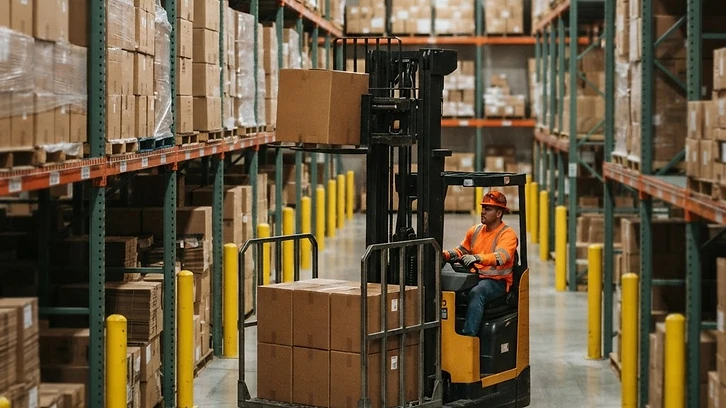
In many fast-moving fulfillment environments, order pickers spend substantial time walking aisles only to find empty bins while pallets of the exact same product sit untouched in high-bay reserve racking. This breakdown occurs when operations treat inventory replenishment solely as external purchasing rather than an active internal logistics cycle. A pick face operates as a high-density, accessible forward zone designed for rapid unit selection, while reserve storage holds bulk pallets, master cases, and overflow goods.
When forward pick locations run dry mid-shift, order pickers are forced to halt picking, locate a material handler, wait for a forklift to retrieve reserve stock, and open master cases on the fly. This unplanned intervention creates pick path congestion, inflates cycle times, and disrupts wave progress. As detailed in tactical operational research on [warehouse replenishment methods by Synkrato](https://synkrato.com/guides/warehouse-replenishment-process-methods-best-practices/), structured internal replenishment bridges this gap by systematically transferring items from reserve locations to forward pick faces before pickers ever encounter a stockout.
Core Replenishment Models: Min-Max vs. Demand-Driven Triggers
Choosing the proper replenishment trigger determines when material handlers transfer goods from reserve to forward pick bins. Operations teams generally implement one of two primary strategies depending on demand predictability and SKU velocity.
The first method is Minimum/Maximum (Min-Max) replenishment. Under this system, each forward pick location is assigned a lower threshold (the minimum) and an upper capacity limit (the maximum). When picking activity drops bin inventory to or below the minimum threshold, a replenishment task triggers automatically to top the bin back up to its maximum capacity. Min-Max is ideal for steady-demand items, hardware, consumables, and standard retail catalog units.
The second approach is demand-driven wave replenishment. Rather than relying solely on static bin thresholds, this model evaluates current customer order waves, scheduled fulfillment batches, and expected SKU velocity. If an upcoming pick wave requires 80 units but the forward pick bin contains only 25, the system creates an advance replenishment task to bring down the required master carton prior to wave release. Blending both models ensures high-velocity lines remain adequately stocked without congesting pick faces with slow-moving inventory.
Determining Replenishment Thresholds and Bin Capacities
Setting arbitrary bin levels leads either to frequent pick-face stockouts or dangerous overfilling where goods spill into adjacent slots. Calculating a reliable replenishment trigger requires analyzing three operational variables: pick velocity, replenishment lead time, and cubic bin capacity.
To establish the minimum trigger level, calculate the expected pick velocity during the time it takes an operator to retrieve reserve stock, navigate aisles, break down packaging, and complete putaway. Add a buffer for safety stock to handle unexpected pick spikes during that window. For example, if an item moves at an average rate of 12 units per hour and physical transfer takes 30 minutes, your baseline transfer requirement is 6 units. Adding a 4-unit safety cushion establishes a minimum replenishment trigger of 10 units.
Bin maximums must respect physical cube and weight limits. As emphasized in standard [inventory replenishment best practices by NetSuite](https://www.netsuite.com/portal/resource/articles/inventory-management/inventory-replenishment.shtml), maintaining clean counts and physical volume awareness prevents slot congestion. The maximum should hold enough stock to minimize the daily frequency of replenishment runs while avoiding multi-case overstocking that blocks access to surrounding bins.
Source Selection and Stock Rotation Rules
Locating reserve stock is not simply about pulling down the nearest available pallet. Pulling stock haphazardly leads to pallet fragmentation, orphaned inventory, and expired lots hidden behind fresh shipments.
Replenishment procedures must enforce strict First-In, First-Out (FIFO) or First-Expired, First-Out (FEFO) rules. Handlers must pull from lots nearing expiration or from open reserve pallets before opening factory-sealed pallets. Additionally, teams should prioritize partial master cartons in reserve racks to consolidate fragmented pallet locations and free up bulk vertical positions for newly received freight.
Clear physical location naming is critical for rapid retrieval. Reserve locations should follow a standardized alphanumeric system (such as Bay-Aisle-Rack-Tier) so material handlers can verify that the reserve unit retrieved matches the required lot and variant before descending to the floor.
Executing the Physical Transfer: Staging, De-Trashing, and Putaway
The physical handoff between reserve racking and forward pick bins requires standardized handling to prevent aisle blockages and inventory damage. Establish dedicated cross-aisle travel lanes and scheduled replenishment windows during low-traffic shift changes or pre-wave staging hours.
When handling master cartons, de-trashing should occur in staging areas rather than inside narrow picking aisles. Corrugated cardboard boxes, plastic banding, and stretch wrap must be removed and placed into recycling receptacles before inner units enter pick bins. Loose packaging clutter in pick aisles represents a primary tripping hazard and slows down fulfillment carts.
During final putaway, the material handler must inspect the product orientation. Forward pick stock should always be front-facing with barcodes positioned outward toward the picker. Stacking loose items beyond bin divider edges must be strictly prohibited to prevent cross-bin contamination.
Closing the Data Loop: Verification and Real-Time Reconciliation
Replenishment is only complete when physical movement matches digital inventory balances. As operational guides on [warehouse bin replenishment by SKUSavvy](https://www.skusavvy.com/docs/guides/warehouse/stock-replenishment) illustrate, tracking bin-to-bin transfers requires accurate source and destination verification.
Operators should scan the reserve location barcode, verify the item SKU and quantity removed, and immediately scan the forward destination bin label upon putaway. Confirming the transfer in real time prevents 'phantom stockouts'—scenarios where the system believes inventory is available for picking, but it remains sitting on a replenishment cart halfway across the facility.
Documenting exceptions during transfers is equally crucial. If a reserve pallet contains fewer cases than recorded, or if a pick bin reaches full capacity before the transferred batch is exhausted, the operator must record the discrepancy immediately so inventory controllers can investigate variances before cycle counts fall out of alignment.
Key Performance Metrics for Measuring Replenishment Health
To ensure replenishment workflows scale effectively with order volume, operations managers should monitor targeted operational key performance indicators (KPIs). Tracking these metrics highlights bottlenecks before fulfillment lines slow down.
Monitor 'Replenishment Cycle Time'—the duration from trigger generation to final putaway verification. Measure 'Emergency Replenishment Frequency,' which captures how often pickers must stop work to request an unscheduled stock refill. High emergency rates indicate that minimum thresholds are set too low or lead times are underestimated.
Finally, track 'Pick-Face Stockout Rate' alongside picking productivity. An optimized replenishment process should virtually eliminate zero-stock bin conditions during scheduled picking waves, keeping material flow predictable and maintaining clean warehouse order throughput.